
Land Core Newsletter - January 2026

Image from Unsplash+.
Dear friends and colleagues,
Happy New Year!
2026 is already filled with both opportunities and challenges for farmers, soil health, and American agriculture.
But before we get into all of the news, we're excited to share Land Core's 2025 Year in Review, which details our research findings, policy progress, and the partnerships we built to advance soil health this past year. Please share it with the soil health advocates, funders, partners, and producers in your network.
It goes without saying that none of these accomplishments would have been possible without the producers who continue to invest their time, effort, and resources in soil health practices despite navigating often confusing policies, regulations, funding, and programs. We are grateful to them and to everyone working to support them.
Looking forward, Land Core is encouraged by the opportunities we see to build momentum together in 2026, and we look forward to the journey ahead.
Read on for recent federal policy updates on the farmer bailout package, a delayed farm bill markup, new dietary guidelines, upcoming events, and what we’ve been reading/watching.
Warmly,
The Land Core Team
Start 2026 by investing in the soil that sustains us all.
Land Core is the only organization exclusively focused on advancing federal policy and financial incentives for soil health. This work bridges political divides and creates real economic value for American farmers. Your support directly funds our work to build systems that ensure the soil that grows our food, quite possibly the most essential asset we have as a nation, is not overlooked.
Whether you give $25, $250, or more… or sign up for a small monthly donation, your contribution makes a tangible difference. This new year, make supporting healthy soil and thriving farms part of your commitment to a resilient future.
Policy Updates
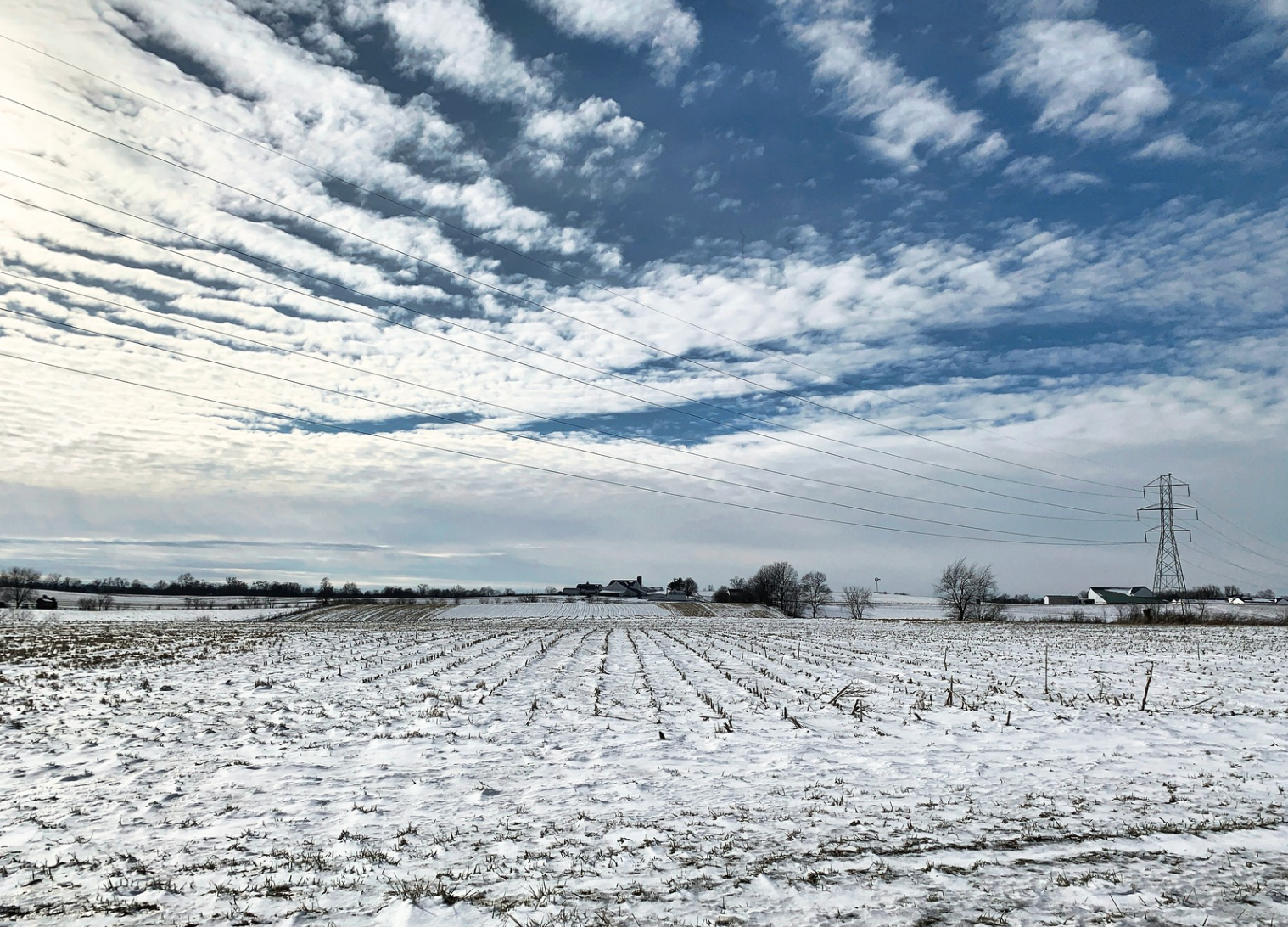
Image from Unsplash+.
Farmer Bailout Package Update
At the end of December, Agriculture Secretary Brooke Rollins provided details on how the payments from the Trump administration’s $12 billion farmer bailout package will be allocated to eligible producers. Payment rates will be determined by producers’ planted acres in 2025 and will vary by crop. The highest payment rates will be reserved for farmers who produced rice and cotton in 2025, while details on payment rates for producers of specialty crops have not yet been provided by the administration. Payments are expected to reach farmers by the end of February 2026.
Farm Bill Markup Delays
In December, House Ag Committee Chair Rep. G.T. Thompson (R-PA-15) and Senate Ag Committee Chair Sen. John Boozman (R-AR) both indicated a farm bill markup would begin in January. However, on January 9, Rep. Thompson announced the markup has been delayed until February to allow Rep. James Baird (R-IN-4) time to recover from a serious injury, to honor the recent passing of Rep. Doug LaMalfa (R-CA-1), and for other procedural delays, as reported by Agri-Pulse.
Other DC Updates: Government Funding Ending in January
To end the longest federal government shutdown in U.S. history, Congress passed a continuing resolution in November 2025 that temporarily funded most federal agencies through January 30, 2026. If Congress fails to pass full-year appropriations before that deadline, another partial federal government shutdown could occur.
Importantly, agriculture-related agencies are not affected by the January 30 deadline, as they are already funded through September 30, 2026.
Rooted in Health
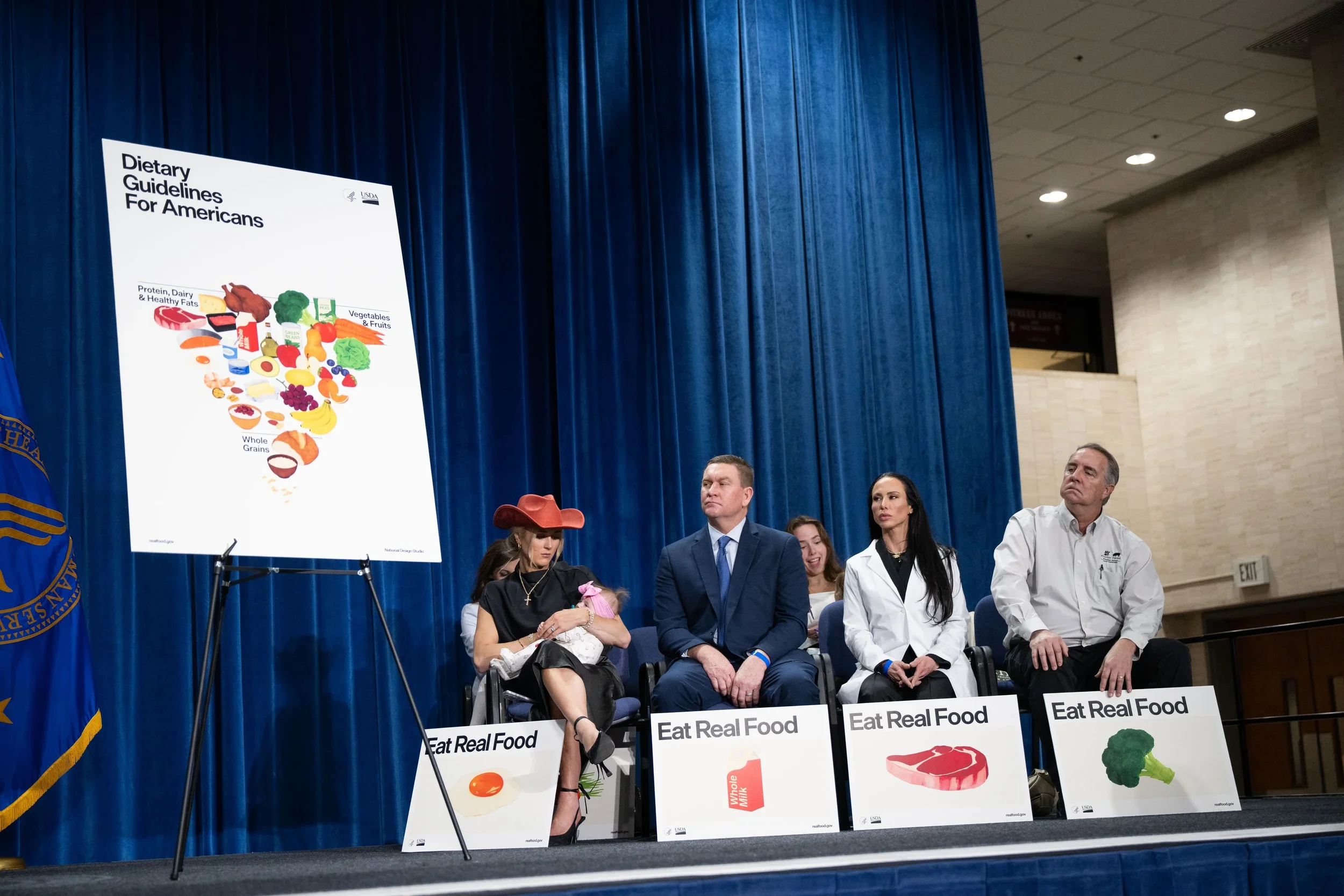
Image from USDA's Flickr.
New Dietary Guidelines Released
Department of Health and Human Services Secretary Robert F. Kennedy Jr. and Department of Agriculture Secretary Brooke Rollins unveiled the 2025-2030 Dietary Guidelines for Americans on January 7, 2026. The revised Guidelines, which scrapped the previously utilized MyPlate diagram, present an inverted food pyramid to urge Americans to eat “whole, nutrient-dense foods.”
Despite recent attention to soil health at HHS, and a call in the updated Guidelines for farmers and ranchers to help shift our food system towards “nutrient density, nourishment, resilience and long-term health,” the guidelines did not explicitly mention healthy soil. Land Core seeks to emphasize the positive association between the utilization of farming practices that promote soil health, increased nutrient density of produce, and broader human health outcomes. Check out our recent social post for additional commentary.
Reminder to Share Your Thoughts!
Image from Unsplash+.
The Federal Crop Insurance Corporation (FCIC) is accepting public comments until January 27, 2026, on a rule expanding access to risk protection, implementing changes from the One Big Beautiful Bill Act (OBBB), and streamlining several crop insurance policies. You can review the changes and share your thoughts by submitting a public comment here.
Land Core believes the Expanding Access to Risk Protection (EARP) Rule makes administrative and eligibility changes that actually restrict access to vital farm safety net resources already difficult to obtain. The rule represents a missed opportunity, and we urge the FCIC to recognize the risk mitigation potential of soil health practices and incentivize producers with reduced premiums, as these practices demonstrably increase resilience to extreme weather events (drought and excess moisture) that drive the majority of crop insurance claims.
If you’re interested in collaborating on comments or have experiences to share about how federal crop insurance rules have impacted your ability to build resilience on your operation, we'd love to hear from you - reach out to Land Core at staff@landcore.org.
In Case You Missed It

Image from Unsplash+.
Check Out Our December 2025 Bill Tracker Alert!
Our Winter 2025 Federal Soil Health Bill Tracker Alert (shared last month) and recent bill updates are available on our bill tracker. Sign up here to not miss the next quarterly alert.
Food Hub Mentorship Program
Think Regeneration has launched a peer-to-peer mentorship program connecting food hub leaders across Oklahoma, Kansas, and the Midwest to help standardize operations and expand supply chains. The program pairs experienced food hub operators managing hundreds of farmers with emerging hubs looking to grow, addressing coordination gaps identified as a key obstacle to getting healthy food into institutional markets. Learn more here.
Did you know?
The National Good Food Network (NGFN) defines a food hub as a “business or organization that actively manages the aggregation, distribution, and marketing of source-identified food products primarily from local and regional producers in order to satisfy wholesale, retail, and institutional demand.”
We’re Hiring: Policy Manager
Land Core is continuing our search for a talented, pragmatic, and dedicated Policy Manager as we build additional capacity for our policy priorities, government affairs, and educational initiatives. This role will lead outreach to relevant agencies and Congressional offices, help build coalition support for soil health-focused initiatives, and expand Land Core’s capacity to leverage current and emerging legislative and agency opportunities to strengthen soil health.
Please note that this full-time role requires frequent in-person meetings with partners and policymakers in Washington, D.C., in addition to remote work. More details here.
We are actively reviewing strong candidates and welcome additional referrals from our network.
Upcoming Events
January 23-24, 2026 - Roots of Renewal Conference (Montrose, CO)
Formerly the Western Colorado Soil Health, Food & Farm Forum, this conference brings together farmers, ranchers, and agricultural professionals to explore soil health, regenerative agriculture, and sustainable food systems on Colorado's Western Slope. Attendees will access regionally-specific information on livestock and crop production, water management, innovative marketing strategies, and specialty crop cultivation. Learn more and register here.
January 31, 2026 - NOFA NJ Annual Winter Conference (Asbury Park, NJ)
This conference features workshops on organic grain production, specialty fungi, grazing practices, and agrivoltaics, plus a keynote on storytelling in agriculture with The Moth. The day-long event will bring together 500+ farmers, gardeners, and food system advocates with sessions covering everything from financial management to food policy and CSA models. Learn more and register here.
February 2-5, 2026 - Compost 2026: USCC Conference & Trade Show (Sacramento, CA)
This event brings together the compost industry, government, nonprofits, and other compost advocates to talk about the opportunities and challenges in expanding compost adoption. Learn more and register here.
February 4-5, 2026 - Underground Innovations (Frankenmuth, Michigan)
Michigan Agriculture Advancement (MiAA) is hosting this in-person gathering for farmers, agricultural professionals, and curious innovators to connect, learn from diverse speakers, and share ideas for implementation on farms and in communities. Learn more and register here.
February 5-6, 2026 - Pasa Sustainable Agriculture Conference (Lancaster, PA)
One of the largest and longest-running sustainable agriculture conferences in the U.S., this event convenes thousands of farmers, educators, and advocates to share research, practical skills, and community-based solutions for a just and regenerative food system. Learn more and register here.
February 12-14, 2026 - OEFFA Conference 2026 (Newark, OH)
This is a cornerstone event for sustainable agriculture in the Midwest, bringing together hundreds of farmers, researchers, and advocates to exchange knowledge on soil health, policy, marketing, and ecological farming practices. Learn more and register here.
February 26-28, 2026 - Marbleseed Organic Farming Conference (La Crosse, WI)
This is the largest event in the Midwest dedicated to organic and regenerative farming. It offers more than 60 workshops, farmer-led sessions, and a trade show focused on soil health, on-farm innovation, and community resilience. Learn more and register here.
What We're Reading/Watching
Image from Unsplash+.
"Removing the Silos: Advancing Food is Medicine"
Think Regeneration, OCIA International, and the USDA's Transition to Organic Partnership Program have released a free documentary on YouTube exploring how leaders are building connections between health care, agriculture, and economic development to address chronic disease and rural decline. The film features interviews with food-is-medicine movement leaders discussing the human networks needed to ensure nutritious food values are maintained throughout the entire supply chain, from farm to patient.
By Think Regeneration, OCIA International, and the USDA's Transition to Organic Partnership Program, December 18, 2025
As 2025 ends, farmers are still reeling from the shake up of markets and federal programs
This piece presents producer perspectives to emphasize the factors contributing to financial uncertainty among US farmers, including tight margins, low crop market prices, rising production costs, shifting tariffs, and disruptions to USDA programs in 2025, leaving many producers struggling to plan and manage operations amid ongoing market volatility and changes in federal support.
By Hope Kirwan, Wisconsin Public Radio, December 30, 2025
10 Farm Bill Proposals to Watch in 2026
Civil Eats highlights a range of recently introduced marker bills that could shape the next farm bill, from expanding access to credit and rural loans to addressing forever-chemical contamination, supporting organic supply chains, and modernizing food procurement amid ongoing delays in passing a comprehensive legislative package.
By Lisa Held, Civil Eats, January 5, 2026
Worms signal success in regenerative farming
Doug Steffen, a Nebraska farmer, discusses his long-term implementation of regenerative practices and describes his utilization of worm-rich compost to fertilize his fields biologically. This approach illustrates how regenerative practices that promote soil health can reduce commercial inputs and support on-farm productivity.
By Curt Arens, Farm Progress, January 6, 2026
Indigo Agriculture announced a 12-year agreement for Microsoft to purchase 2.85 million soil carbon removal credits generated through regenerative agriculture practices, reinforcing long-term corporate investment in soil carbon markets and supporting farmers adopting soil-building practices.
By Indigo Agriculture, January 15, 2026
Updated Federal Data Shows States With Little to No USDA Staff
The USDA has lost 21 percent of its workforce since the start of the second Trump administration, with over 24,600 employees departing and leaving 37 state-level agency offices completely unstaffed. The cuts have particularly impacted rural development offices and the NRCS, raising concerns about the agency's ability to serve farmers and administer critical farm programs and aid.
By Rebekah Alvey, Civil Eats, January 21, 2026