
Land Core Newsletter - November 2026
Image from Unsplash+.
Dear friends and colleagues,
This month, we’re grateful for the farmers, policymakers, researchers, partners, and soil health advocates working towards a more resilient agricultural system.
The midterms have significantly reshaped both Agriculture Committees heading into the 120th Congress, and the coming weeks will be busy as lawmakers weigh FY27 appropriations and a possible lame-duck farm bill. Whatever the path forward, we remain focused on practical, cost-effective, bipartisan policy that reduces risk for farmers and taxpayers by supporting healthy soils.
There are encouraging signs that this focus on the risk-reducing benefits of soil health is gaining ground. New private insurance products are beginning to price field-level risk, and Illinois and Iowa are again offering crop insurance discounts for cover crops, among other progress.
Land Core’s Executive Director and Co-Founder, Aria, will be in DC December 1-4 for Congressional and partner meetings. If you’ll be on the Hill that week or would like to connect in person, please reach out to staff@landcore.org.
And with Giving Tuesday coming up on December 1, we hope you’ll consider supporting Land Core’s work. Even a small monthly gift helps move soil health and agricultural resilience forward.
With gratitude,
The Land Core Team
Federal Policy Updates
Image from Unsplash+.
2026 Midterm Results and Ag Committees in the 120th
The 2026 Midterms saw major changes in rural and farm country, leaving both the House and Senate Agriculture Committees with a very different makeup for the 120th Congress. On the House side, at least 14 current Committee members will not return next year, with some members retiring, some elected to other positions, and some losing re-election. One more race, Rep. Brad Finstad (R-MN-1), has not yet been called by AP as of November 19. On the Senate side, eight current members will not return.
In the race to lead Democrats on the House Ag Committee, Rep. Shontel Brown (OH-11) is considered the frontrunner. Reps. Jim Costa (CA-21), and Don Davis (NC-1) are also in the race. House Democrats are expected to decide next year’s Committee leadership in early December.
In the Senate, Sen. Michael Bennet (CO) is slated to replace Sen. Amy Klobuchar, who won her race to become Governor of Minnesota, based on seniority. That could change if the Democratic caucus moves to restore the seniority of Sen. Sherrod Brown (OH), who is returning to the chamber after losing re-election in 2024.
For Republicans, current House Ag Chairman Rep. G.T. Thompson (PA-15) has yet to receive approval for his waiver to serve as top Republican for a fourth term. Current Senate Ag Committee Chairman John Boozman (AR) will remain in his position as the top Republican on the Senate side.
FY27 Appropriations and Lame Duck Funding Battle
On November 10, Senate Appropriations Committee Chair Susan Collins (R-ME) released text of the FY27 Agriculture, Rural Development, Food and Drug Administration appropriations bill ahead of the December 11th funding deadline. The bill would provide $27.3 billion in discretionary funds for the agencies, including $923 million to USDA-NRCS. Importantly, the bill moves to stop USDA from using funds to carry out its reorganization plan, which a federal district court blocked last month, preventing the closure of county FSA offices, moving to protect NRCS staffing levels, and requiring congressional approval for staff relocations.
The bill’s accompanying Explanatory Statement also contains several provisions related to soil health, including language on cover crop research, farmer-to-farmer conservation networks, and support for increasing technical assistance for soil health planning.
The state of the appropriations process this year remains unclear, with another short-term Continuing Resolution of FY26 funding levels favored by Democratic leadership in both the House and Senate Appropriations committees.
And a Farm Bill?
Meanwhile, negotiations between committee leadership continue on the possibility of a farm bill in the lame-duck, with Sens. Boozman and Klobuchar committed to passage this year. While the main sticking point remains how long to delay the SNAP cost-share requirement, Chairman Thompson and other House Republicans have shared that they are willing to negotiate on a two-year delay. The differences between the House bill, passed in April, and the Senate version, passed out of committee in September, will need to be reconciled, including controversial measures such as E-15 and Mandatory Country of Origin labeling.
As the calendar runs out and the Congressional to-do list remains long, chances increase that a farm bill may be attached to another must-pass legislative vehicle to move this year, a possibility that Senate Majority Leader Thune has said he is open to. President Trump has also weighed in, urging Congress to pass a bill this year.
Without a new farm bill or a new extension (the last extension expired September 30), certain farm programs’ authority expires, or reverts to Depression-era permanent law, starting January 1st.
🌾Donate to Land Core! Support our programs to advance soil health and a resilient agricultural system in the U.S.
Giving Tuesday is just around the corner, and today we’re asking you to invest in a future built on resilient soils and resilient communities.
Your donation fuels Land Core’s work to:
Elevate soil health in the policies and programs shaping agriculture
Demonstrate the risk-reducing value of soil-health practices to lenders, insurers & investors
Provide clear, accessible resources like our Federal Soil Health Bill Tracker, Economic Benefits of Soil Health 1-Pager, and (forthcoming) Agricultural Risk & Resilience Policy Platform
If you’re able, consider a monthly gift. Even $5 helps move soil health forward.
Join Land Core’s Farmer & Finance Advisory Councils
Image from Unsplash+.
As we shared in last month’s newsletter, we’re launching two new advisory councils: a Farmer Council and a Finance Council (for lenders, insurers, and investors).
Each group will bring practical, on-the-ground insight directly into our work, offering expertise from different sides of agricultural risk and a clear view of the challenges facing both farmers and the financial institutions that support and depend on them. We also hope to bring the real needs, concerns, and successes of these new partners directly to members of Congress and their staff when we’re in DC.
Participation is designed to be low-lift and may include a short meeting every couple of months and occasional remote feedback, scheduled around your operation’s busy seasons.
If you’re a farmer, lender, insurer, or investor, or if you know someone we should be talking to, please reach out to staff@landcore.org.
Risk and Resilience Happenings
Land Core’s Agricultural Risk & Resilience Policy Platform Coming Soon!
Disaster and crop insurance costs continue to climb, and our farm safety net is still built mostly to respond after losses happen. Land Core’s upcoming policy roadmap makes the case for a different approach: reducing risk beforehand by supporting the soil health practices that make farms more resilient. Drawing on our Risk Model research and a broad review of legislation, state programs, and partner input, the roadmap lays out practical, cost-effective, bipartisan ideas across seven areas, from crop insurance pricing and design to capital access, data infrastructure, and soil health’s benefits beyond agriculture.
This platform will be a companion to our recently released one-pager, The Economic Value of Soil Health: Less Risk, More Resilience.
Keep an eye out for its release before the December holidays!
New Private Crop Insurance Product Prices Field-Level Risk
A new crop insurance product announced in late October aims to do something Land Core has long argued for: price coverage based on each field's actual risk. SAGE, an ag-tech company focused on AI-powered risk analysis, is partnering with global insurance brokerage Aon and crop insurance provider AgriCap to launch the product for corn and soybean growers in 15 states across the Corn Belt, beginning with the 2027 crop year. Crop insurance rates have historically been set using countywide averages, which can obscure risk on a specific farm and leave growers paying more than they should. This new coverage option is designed to complement, not replace, federally subsidized crop insurance. Farmers could buy federal coverage for a share of their expected production, then purchase SAGE policies for coverage above that at potentially lower premiums. Read the announcement and learn more.
New Resources for Supporting Healthy Soils Policy in 2027
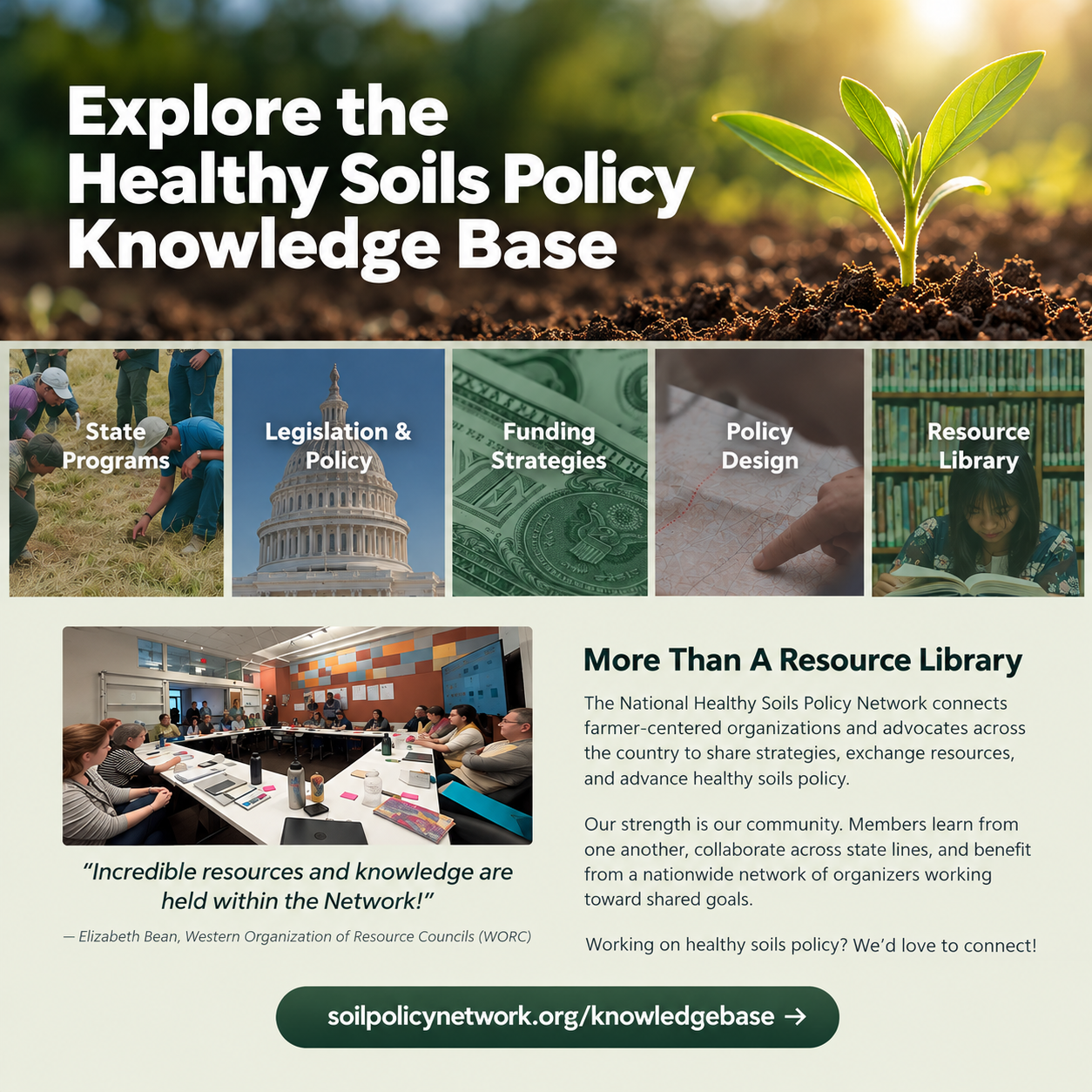
Image from Unsplash+.
The National Healthy Soils Policy Network, a project of CalCAN, has launched a free, public Knowledge Base featuring state-level legislation, programs, funding strategies, policy models, and advocacy resources. Drawing on the collective experience of farmer-led advocates across the country, this resource helps policymakers, organizers, and researchers discover promising approaches, learn from other states, and strengthen healthy soils policy campaigns.
Funding Opportunities
SARE Grants for Midwest Farmers & Partners
North Central SARE is accepting proposals for its 2027 grant programs, with four major programs due December 3. Farmer Rancher Grants fund on-farm research, demonstrations, and education led by producers themselves, with individual grants up to $15,000 or team grants up to $30,000 for 2+ farmers or ranchers working together. Research and Education Grants support researchers and educators, Youth Educator Grants support youth educators to encourage youth to try sustainable practices, and Partnership Grants fund cooperative projects between agriculture professionals and small groups of farmers and ranchers. Learn more and apply here.
Illinois Fall Covers for Spring Savings
Illinois farmers can get up to $5 per acre off their 2027 crop insurance premium for each verified cover crop acre seeded in fall 2026 and planted to an insurable crop in 2027. Pre-enrollment opens November 30; applications open December 15 and close January 15, 2027. Acres are capped at 190,000 statewide and funded on a first-come, first-served basis, so apply early. You’ll need to certify cover crops with your local FSA office first and have your FSA-578 and crop insurance policy numbers on hand. Apply here once enrollment opens.
Iowa Crop Insurance Discount Program
Iowa farmers can earn a $5 per acre discount on 2027 premiums for eligible fall cover crops, with no cap on acres. Sign-up runs December 1, 2026 through January 22, 2027. Learn more and apply here.
Grazing Operations: Growing GRASS Now Enrolling
Beef and bison producers using prescribed grazing (NRCS Practice 528) can get paid to join Growing GRASS, a USDA-funded project building higher-value markets for hides, organs, and other byproducts. Enrolled producers receive $3,000 for completing a survey, plus funding for audits, certifications, training, and data collection, up to $24,000 per producer through June 2027. You’ll need an active USDA Farm number and a current FSA Subsidiary Print. CAFOs and operations in another USDA AMP beef or bison project aren’t eligible. Expenses before enrollment can’t be reimbursed, so enroll first. Learn more here.
Paper of the Month
Long-Term Economic Returns to No-Till Adoption: Evidence from Field Trials in the US Midwest by Yifei Zhang, Roderick M. Rejesus, et al., Jul 2026
A new peer-reviewed study from researchers at North Dakota State, NC State, USDA, and Michigan State uses more than 30 years of field trial data from Ohio and Michigan to show that no-till pays off over the long run. No-till cut operating costs at every site, raising net returns by roughly $34 to $93 per acre for corn and $30 to $86 per acre for soybean. Those savings held up in every decade and generally grew over time. The authors conclude that because the early transition can still be costly, targeted transitional support may work better than uniform, ongoing support.
Check out October’s Paper of the Month, which highlighted how the yield benefits of low-intensity tillage grow with each year of adoption, positioning low-till as a climate adaptation tool.
Upcoming Events

Image from Unsplash+.
November 24, 2026 - Why Aren’t Farmers Buying In? Rethinking Conservation Outreach - Online (2-3 PM ET)
Join SWCS for a practical conversation with experts from the NWF, University of Minnesota Extension, and Clemson University on what motivates farmers to adopt conservation practices and how tailored messaging, trusted relationships, and farmer-to-farmer connections can reach beyond the usual audiences. Free for SWCS members, $15 for nonmembers. Learn more and register.
December 1-4, 2026 - Acres U.S.A. Eco-Ag Conference & Trade Show - Coralville, IA
Join farmers, ranchers, consultants, and researchers for four days of practical sessions on building healthier soils and more profitable, resilient operations, including hands-on workshops (some eligible for Certified Crop Adviser CEUs) and speakers including Ray Archuleta, Gary Zimmer, and John Kempf. Learn more and register.
December 1, 2026 - Farming 250: Unrepresented Stories of American Food and Farming - Online (12-1 PM)
Join Civil Eats for a free virtual conversation with farmers Karen Washington, Jamila Norman, and Lucille Contreras on the barriers facing new and established farmers, from land access to financial pressures, and what it will take to make farming a viable future for more people. Learn more and register.
January 8-9, 2027 - Practical Farmers of Iowa Annual Conference - Des Moines, IA
Join farmers, landowners, and friends of farmers for Practical Farmers of Iowa’s farmer-led annual conference, featuring over 70 sessions with practical takeaways farmers can bring home and an evening of farmer storytelling. Learn more and register.
January 12-15, 2027 - 35th Annual National No-Tillage Conference - Indianapolis, IN
Join no-till farmers, agronomists, and researchers for more than 100 hours of targeted learning and networking at the conference’s 35th anniversary, held in the city where it was first hosted. Learn more and register.
A bit further out…
February 26-27, 2027 - Marbleseed Organic Farming Conference - Delavan, WI
Join small- and mid-scale, diversified, organic, sustainable, and regenerative farmers at one of the Midwest’s largest organic farming gatherings, themed “Seeding Our Collective Future.” Learn more and register.
March 3-4, 2027 - Midwest Grazing & Soil Health Summit - Willmar, MN
Join the Sustainable Farming Association for its annual summit exploring the connection between grazing and soil health as a regenerative path forward for farmers and ranchers. Learn more and register.
What We’re Reading (+ Watching!)
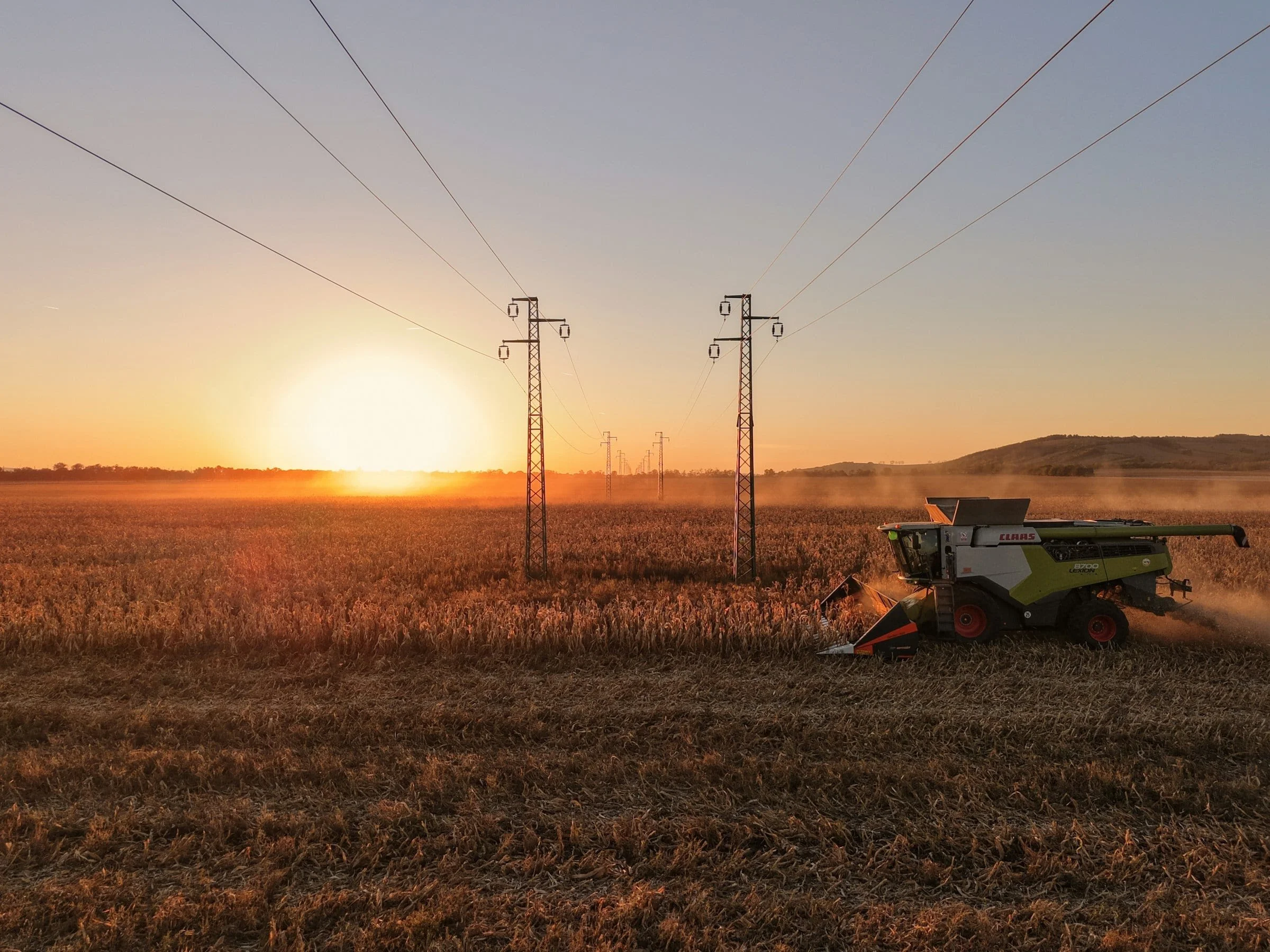
Image from Unsplash+.
We’re Adapting Our Farm to Changing Weather. Crop Insurance Is Holding Us Back.
Idaho farmer Cori Wittman Stitt describes how her family’s diverse rotations and no-till practices build resilience, but federal crop insurance penalized their innovation and labels alternative crops as uninsurable. She argues that crop insurance hasn’t kept pace with how farmers are adapting, and calls on Congress to give RMA the direction and resources to fast-track promising pilots and research.
By Cori Wittman Stitt, DTN Progressive Farmer, November 16, 2026
Why I Farm - Voices from the National Family Farm Coalition
In this video marking the NFFC’s 40th anniversary, NFFC members share what they love about farming and why the work is meaningful to them.
By NFFC, November 16, 2026
How the ‘Blue Wave’ Could Shake Up Food and Ag Policy
This article examines how the new congressional majority could affect food and farm policy, even with President Trump retaining veto power. Drawing on lawmakers and advocates across the spectrum, it examines prospects for a lame-duck farm bill, the fight over SNAP cost-shifts to states, USDA’s reorganization, growing bipartisan attention to input and processing consolidation, and potential efforts to restore conservation, climate-smart agriculture, and Rural Energy for America Program funding.
By Rebekah Alvey and Lisa Held, Civil Eats, November 13, 2026
Washington’s Wake-Up Call? What the Midterms Mean for Farmers and Agriculture’s Agenda
This article gathers reactions from lobbyists and industry leaders on what the midterm results mean for agriculture. Sources point to high input costs and farm economy frustration as factors in rural votes, and are split on whether a farm bill can pass in the lame-duck session. Several argue divided government could push lawmakers toward bipartisan compromise.
By Tyne Morgan, AgWeb, November 6, 2026
Time for a different approach to farming?
In this column, editor and western Illinois farmer Holly Spangler argues that federal farm policy has tilted toward larger operations while small and young farmers absorb rising rents and tight margins. With 8 years since the last farm bill, she notes that five ad hoc payment programs have totaled $105 billion, money that often flows straight through to input costs and rents rather than addressing underlying problems.
By Holly Spangler, Prairie Farmer, November 3, 2026
The Biggest Little Farm SERIES
In this new 12-part docuseries, the official sequel to the Oscar-shortlisted documentary The Biggest Little Farm returns to the farm for a deeper look at what it takes to work with nature rather than against it. Presented by Artemis Rising Foundation with impact partners Rodale Institute and American Farmland Trust, the series is free to stream on YouTube, with new episodes every Sunday. The first three chapters, “A New Way,” “When To Give Up,” and “On Nature’s Time,” are out now. The series and film are excellent choices for multi-generational holiday viewing!
By FarmLore Films, YouTube, November 2026
Principles First, Practices Second: Why Healthy Soil Can’t Be Prescribed
In this blog post, Paicines Ranch founder Sallie Calhoun argues that policy conversations about regenerative agriculture too often fixate on one or two practices, like cover cropping, and then subsidize them with rigid, prescriptive rules. She explains that healthy soil comes from stacking three or four practices grounded in core principles and adapted to each farm’s context.
By Sallie Calhoun, #NoRegrets Initiative Blog, 2026