
Land Core Newsletter - October 2026
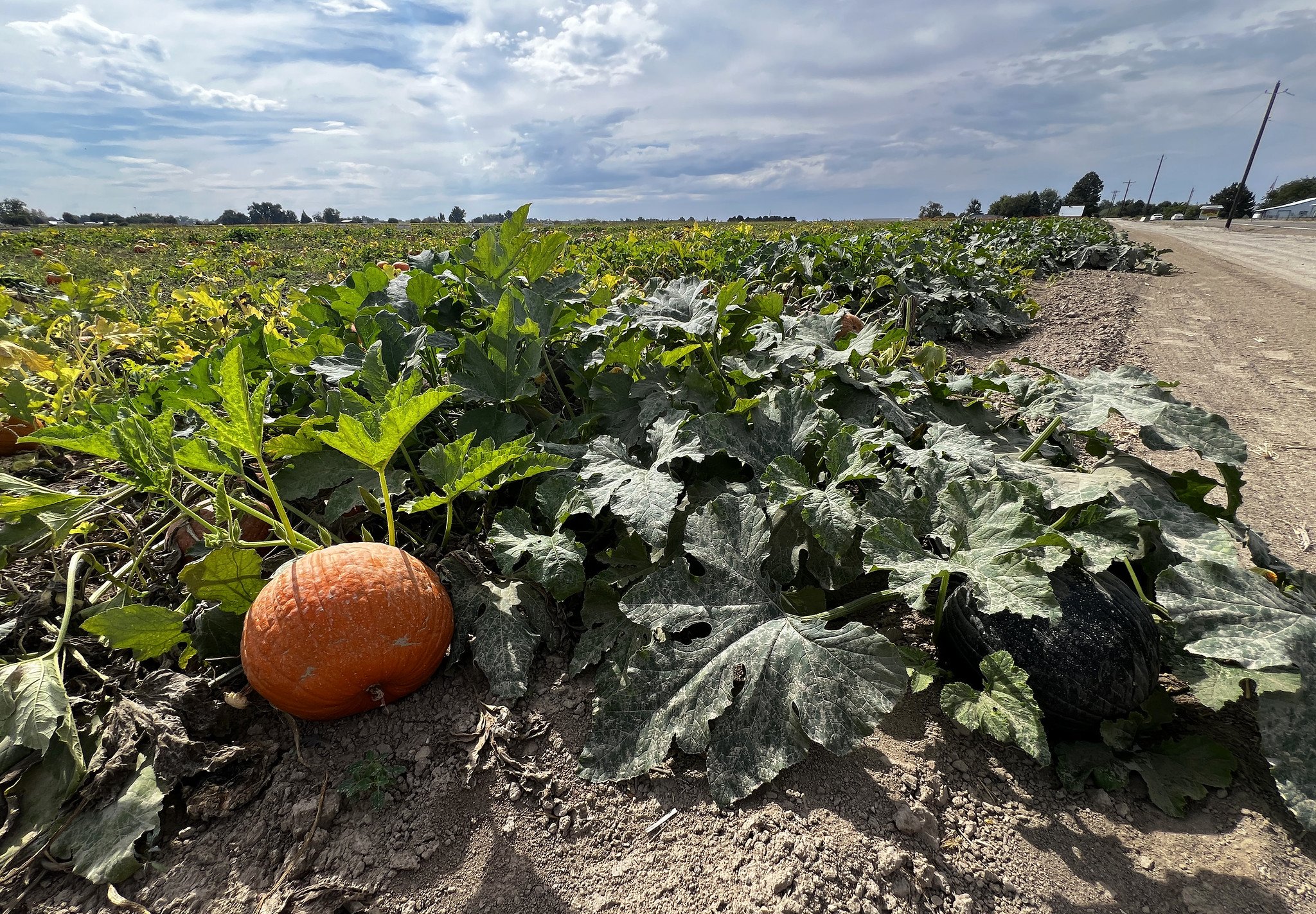
Image from USDA's Flickr.
Dear friends and colleagues,
This month, we’re excited to share meaningful progress on our risk modeling research. In addition to rotational diversity, we've completed modeling for cover crops and reduced tillage across our nine-state region. This work brings us one step closer to rewarding farmers for their soil health practices. By giving lenders, insurers, and government programs a tool to measure how these practices reduce risk, we can help them pass savings on to these farmers.
We’re also launching the Land Core Advisory, two groups that will help us hear directly from the people our work is meant to serve: one made up of farmers, and one of financial stakeholders (lenders, insurers, and investors). Their perspectives will help guide and inform our work as it develops. Learn more below.
This month’s newsletter also explores the unpredictable agriculture policy landscape we’re in, new research on resilience and regenerative agriculture, and opportunities to support the next generation of farmers and protect working lands.
Read on for the latest updates!
With gratitude,
The Land Core Team
Risk Model Updates
Image from Unsplash+.
If you’ve been following Land Core over the past few years, you know we’ve been working toward fully assessing the risk reduction associated with three soil health practices across the nine Midwestern states our tool will cover. We started with crop rotations, and we’re excited to share that we now have results for cover cropping and reduced tillage as well.
With all three practices modeled across the nine-state region, this is one of the broadest assessments of soil health and farm risk in the country.
Next, our team is modeling the revenue and economic impacts of these practices across the same region, and we’re preparing to release all of this work in an updated version of the Land Core Risk Model Tool for agricultural lenders and insurers.
New to our risk modeling research? Learn more here.
Join Our New Advisory Councils!
To ensure Land Core’s work reflects the realities on the ground, we’re launching two new advisory councils: a Farmer Council and a Financial Stakeholder Council (for lenders, insurers, and investors).
Each group will bring practical, on-the-ground insight directly into our work, offering expertise from different sides of agricultural risk and a clear view of the challenges facing both farmers and the financial institutions that support and depend on them. We’ll also continue to bring the real needs, concerns, and successes of these partners directly to members of Congress and their staff when we’re in DC.
Participation is designed to be low-lift and may include a short meeting every couple of months and occasional remote feedback, scheduled around your operation’s busy seasons.
If you’re a farmer, lender, insurer, or investor, or if you know someone we should be talking to, please reach out to staff@landcore.org. More details coming soon.
🌾 Donate to Land Core! Support our programs to advance soil health and a resilient agricultural system in the U.S.
Federal Policy Updates
Image from Unsplash+.
Busy Lame Duck
Congress will return on November 9th after the midterm election to a full agenda in the lame duck session. The Senate Farm Bill (S. 5526), which passed out of committee in September, is awaiting a vote on the Senate floor. The stopgap funding bill passed last month is also set to expire on December 11th, while the Senate has yet to advance any regular appropriations bills for FY2027. The Senate may also take up an additional farm assistance package, following the $12 billion in aid approved in the House’s latest budget resolution. If passed this year in a spending vehicle, funds would likely reach farmers in spring of 2027.
Ongoing Legal Battle Over USDA Reorganization
On Tuesday, October 13th, the U.S. District Court of the Northern District of California moved to block key parts of USDA’s reorganization plan, siding with a group of federal employee unions, nonprofits, and local governments that sued over the changes earlier this year. Judge Vince Chhabria found USDA is likely not authorized to use funding for the reorganization per the FY2026 agriculture appropriations legislation. That restriction carries forward under the current stopgap funding bill, which expires December 11, after which Congress may authorize use of funds for the plan for the next appropriations cycle.
The reorganization plan would relocate staff from USDA’s Washington, DC headquarters to five regional hubs. USDA says the move is intended to bring the Department closer to the farmers and communities it serves, lower costs, and streamline management. USDA’s staff was reduced by 20,000 over 2025, largely through the Deferred Resignation Program, with significant cuts to NRCS. The cuts have reportedly resulted in major disruptions in services for farmers and rural communities.
Funding for Rising Diesel Costs
On October 19th, USDA announced a new $8 billion Harvest Fuel Relief Program, which will offer one-time relief payments for farmers impacted by high diesel and input prices. The program, funded through the Commodity Credit Corporation, will use a proportional formula to cover part of modeled 2026 losses; the details of the payment rates by commodity will be released in November.
This announcement follows President Trump’s Executive Order, signed October 5th, that temporarily waives penalties for highway use of tax-free dyed diesel and defers the federal tax on that fuel through the end of the year. The IRS has released its own guidance on the EO, but has not yet clarified how it may handle resuming collection of the dyed diesel tax next year.
Both measures are part of the Administration's efforts to bring down record-high fuel prices for producers. Nationally, diesel prices have risen to more than $2.50 a gallon above last year’s prices. In an October DTN survey, 86% of producers reported that these prices are impacting their profitability.
ICYMI
Regrow’s “A Decade in the Field” Interview Series: Hear from Land Core ED, Aria!
As Regrow approaches its 10th year, they launched an interview series called “A Decade in the Field,” with leaders who have spent years working to scale regenerative agriculture. Land Core Co-Founder and ED, Aria, was featured among the first seven interviews, alongside leaders from General Mills, Oatly, Bartlett, Trust In Food/Farm Journal, Soil Capital, and Sand County Foundation.
In the conversation, Aria reflects on how the past decade has changed who shows up to shape agricultural policy. Businesses have shifted from deregulation-only advocacy to proactively engaging in programs that support farmers, driven in part by supply chain risk and Scope 3 commitments. Aria also details how incentives should stay grounded in outcomes and actuarially sound assessments of how much soil health practices reduce risk on the landscape. She also speaks to soil health’s staying power across the political spectrum, citing our Federal Soil Health Bill Tracker, which tracks bills introduced in Congress with a soil health impact.
Soil & Climate Alliance webinar, From Policy to Practice + What Farmers Need to Know
Land Core’s Executive Director, Aria McLauchlan, recently spoke on a Soil & Climate Alliance panel about why so many farm policies fall short once they reach the field. Alongside Tim Gibbons (National Family Farm Coalition) and Max Sano (Beyond Pesticides), Aria made the case that financial tools like crop insurance and agricultural lending should reward the reduced risk that healthy soils provide. Their conversation also covered building fairer markets, strengthening producer safety nets, and the role of pesticide accountability in protecting public health.
Opportunities in Our Network
Image from Unsplash+.
Illinois Department of Agriculture: Fall Covers for Spring Savings
Illinois farmers can earn up to $5 per acre off their 2027 crop insurance premiums for each acre seeded to cover crops this fall, with 190,000 acres available on a first-come, first-served basis. Pre-enrollment opens November 20, and applications run December 15-January 15, 2027; applicants must certify cover crops with their local FSA office first. Learn more.
Iowa Department of Agriculture and Land Stewardship: Crop Insurance Discount Program
Iowa farmers can earn up to $5 per acre off their 2027 crop insurance premiums for each acre seeded to cover crops this fall and planted to an insurable crop in 2027. Signup opens December 1, 2026, and applications are due by January 22, 2027; acres already enrolled in other state or federal cost-share programs are not eligible. Learn more.
Quivira Coalition’s New Agrarian Program
This program is recruiting experienced ranchers and farmers (5+ years in operation, with a regenerative focus) to mentor the next generation of land stewards, and it supplies mentor training on apprentice recruitment, employment logistics, and feedback. Mentor ranches and farms are currently partnered across New Mexico, Colorado, West Texas, Wyoming, Montana, and Idaho. 2027 applications open on October 26. Learn more.
National Young Farmers Coalition: Next Generation Farmer Fund
This is a new $1M+ initiative offering $10,000 to $50,000 grants to farmers and ranchers under 40 who are adopting new conservation practices in 2027, spanning soil health, water management, energy use, and biodiversity, with technical assistance support included. Applications open October 28, 2026, and the Fund is also seeking partner organizations and donations, with gifts doubled through November 30 via a $500K Whole Foods Market match; partners can reach out at donorsupport@youngfarmers.org. Learn more.
National Fish and Wildlife Foundation: Great Plains Grassland Fund
The Great Plains Grassland Fund is offering up to $10M in 2027 for projects that permanently protect high-risk grasslands, primarily through voluntary rancher-led conservation easements, with all awards requiring a 1:1 match. Eligible applicants include nonprofits, state, local, and Tribal governments, and educational institutions, while individuals and for-profits can participate as subrecipients. Full proposals are due January 27, 2027, and awards will be announced in May 2027. Learn more.
Paper of the Month

Image from Unsplash+.
Climate resilience from long-term low till adoption in US farms by Yuchi Ma, David B. Lobell, Oct 2026
A new preprint (not yet peer-reviewed, submitted to EarthArXiv) out of Stanford uses satellite data on more than 40M field-year records across nine Corn Belt states to show that the yield benefits of low-intensity tillage keep growing with each year of adoption, at roughly 0.20% per year for corn and 0.16% per year for soybeans. The benefits of low tillage are strongest in hot, dry conditions. Sustained adoption through 2035 could offset roughly ⅓ to ½ of projected climate-driven yield losses. The authors say this makes low-till a climate adaptation tool and that policies supporting long-term adoption will pay off more than one-time incentives.
New Resources
Carbon180’s Restoring Carbon for Healthy Agricultural Lands Policy Roadmap
This new resource is a roadmap for scaling carbon removal on farms and ranches while strengthening their long-term viability. It builds on Carbon180’s earlier paper, Living Ground, which drew on listening sessions with 200+ land stewards, scientists, and technical service providers.
Their recommendations are organized around five conditions producers identified as essential: infrastructure and market access, land access and tenure, technical assistance and local capacity, incentives and risk mitigation, and monitoring and research. Ideas include free nationwide soil health testing, longer conservation program contracts, expanded perennial seed supply, and a data-driven crop insurance program that builds on-farm resilience.
Land Core’s Executive Director, Aria McLauchlan, shared input with Carbon180 during the roadmap’s development, particularly on its crop insurance recommendations.
USDA NRCS Soil Health Resource Page
USDA’s Natural Resources Conservation Service has refreshed its online soil health resources. Pages are now organized by land use (cropland, forestland, pastureland, and rangeland), with dedicated pages on topics like soil health testing, economics, cover crops, and soil carbon amendments, plus guidance on assessing soil and tracking progress over time. These updated resources are aimed at supporting producers and land stewards, including RPP participants and TA providers.
Upcoming Events
Image from Unsplash+.
October 27-28, 2026 - Transform Food & Agriculture USA 2026 - Minneapolis, MN
Join senior food and agriculture leaders to explore strategies for strengthening supply chain resilience, advancing sustainability, improving procurement, and balancing environmental goals with business profitability. Learn more and register.
October 28-30, 2026 - REGENERATE Conference (Santa Fe, NM + Virtual Options Available): Explore solutions for resilient working lands with workshops, roundtables, and community gatherings. Learn more and register.
November 4, 2026 - March 3, 2027 - SDSU Extension Soil Health Hour Webinar Series (Virtual): Join SDSU Extension specialists, researchers, and South Dakota farmers for free monthly webinars at 10a CT covering no-till, cover crops, livestock integration, soil fertility, and the economics of soil health systems, including a December 2 session on the economic benefits of adopting soil health practices. Learn more and register.
November 18-19, 2026 - Sustainable Agriculture Summit (Fort Worth, TX): Join farmers, suppliers, processors, brands, academia, conservation groups, and the public sector to advance a shared vision for a sustainable and resilient U.S. food system. Learn more and register.
November 20, 2026 - Wisconsin Statewide Organic Strategy Summit (Plover, WI): Join organic farmers, retailers, handlers, researchers, and certifiers to review Wisconsin Organics' new State of Wisconsin's Organic Market 2026 report and help shape the state's first-ever organic strategy for 2027-2029. Learn more and register.
What We're Reading
Image from Unsplash+.
Funding Shortages and Growing Demand Stall Illinois Conservation Efforts
Investigate Midwest reports that state funding for Illinois’ soil and water conservation district operations has dropped to $4.5 million for fiscal year 2027, down from $8.5 million a year in 2022 through 2024, leaving understaffed offices with backlogs as farmer demand for conservation programs keeps growing.
By Nikoel Hytrek, Investigate Midwest, October 20, 2026
A Deeper Dive into What Farm Income Numbers Say About Farm Household Well-Being
AEI argues that despite farm lobby claims of severe financial stress, the sector’s debt-to-asset ratio remains low at around 13 percent, bankruptcies and delinquencies are minimal, and net farm income is projected to top its long-run average in 2026, concluding that farms can weather higher input costs without large federal bailouts.
By Vincent H. Smith and Barry K. Goodwin, American Enterprise Institute, October 15, 2026
From the Ground Up: Transparent Pathways to Regenerative Food Systems
As You Sow benchmarks 19 major food companies on 15 indicators covering their regenerative agriculture programs, policies, and goals, finding that critical gaps remain and that the lack of universal standards makes it hard for investors to measure progress.
By As You Sow, October 15, 2026
Nebraska Farmers Struggle to Transition to Regenerative Farming
In this guest post for The MAHA Report, fifth-generation Nebraska farmer and RegeNErate Nebraska co-founder Graham Christensen explains how commodity-focused farm programs, consolidated input markets, and farmland rental arrangements make it financially risky for farmers to adopt regenerative practices, even when they believe in soil health. He calls for broadening federal support beyond a handful of commodity crops, connecting crop insurance more closely to conservation, investing in mid-sized processing, improving land access for young farmers, and enforcing antitrust laws more aggressively.
By Amy Sapola, The MAHA Report, October 12, 2026
Hear from Rachel how regenerative agriculture supports soil health, climate resilience, water stewardship, biodiversity, and farmer livelihoods at Hershey. The conversation highlights the importance of locally tailored strategies and field-level data to turn corporate sustainability commitments into practical action.
Arva, From the Ground Up Podcast, Episode 3
How Federal Investments Could Shape Regenerative Agriculture Opportunities
New analysis from RTI International examines how changes in funding for five USDA conservation programs could influence regen ag adoption, GHG emissions, and land use through 2050. The findings highlight the importance of region-specific strategies, long-term investment, and farmer support in helping agribusinesses guide sustainability investments and strengthen agricultural supply chains.
By RTI International, October 2026