
Land Core Submits Comments to BLM on Revision of Regulations for Grazing Administration
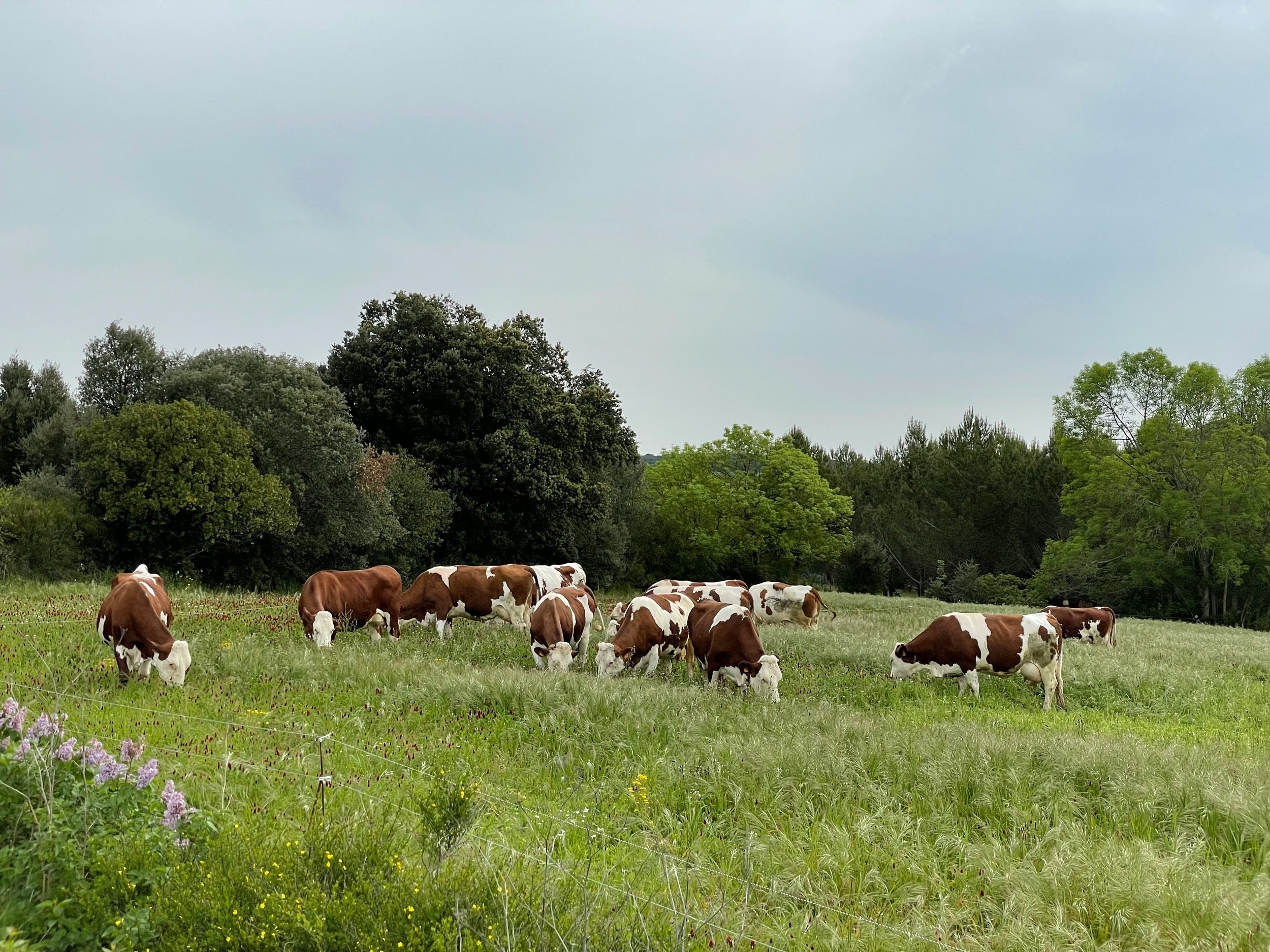
Image Credit: Rose D., Unsplash
Submitted to: Department of the Interior Secretary Doug Burgum and Bureau of Land Management Director Steve Pearce; the U.S. Department of the Interior (DOI) and the Bureau of Land Management (BLM)
Re: Request for Public Comment on the Revision of Regulations for Grazing Administration (Docket ID: BLM-2026-0001)
Date: July 13, 2026
Land Core is supportive of well-managed grazing on public lands as complementary to, rather than opposed to, maintaining healthy grassland landscapes. Across the West and the nation, leading ranchers are using regenerative grazing of livestock as a way to increase the profitability of their operations and provide quality livelihoods, as well as to heal degraded soil, restore wildlife habitat, and replenish dried-up rivers. Regenerative grazing and soil health practices can help foster healthy, resilient landscapes and economic prosperity for the communities that depend on our public lands. These land management practices also support BLM’s mission to sustain the health, diversity, and productivity of public lands for the use and enjoyment of present and future generations, and are consistent with BLM’s multiple-use mandate.
Comment Highlights:
(See PDF for full comments)
Recognize Flexible, Outcomes-Based Regenerative Management as the Foundation for Grazing on Public Lands
Land Core supports the proposed rule's move toward flexibility, including provisions that let permittees adjust turn-in and turn-out dates by up to 21 days and that allow grazing permits to specify limits within which producers can adapt operations without prior approval. Matching grazing schedules to real-time rangeland conditions, rather than a fixed calendar, is core to how regenerative grazing works. Because this flexibility could add up to 42 additional grazing days in a permit year, we recommend that BLM pair it with ongoing monitoring and preserve authorized officers' ability to scale back grazing time whenever overgrazing risk emerges.
We also flag that the rule ties a permittee's flexibility to "demonstrated stewardship" without defining the term, even as BLM proposes eliminating a similar undefined stewardship criterion elsewhere in the rule for being too vague to apply consistently. Land Core recommends BLM resolve this by grounding "demonstrated stewardship" in measurable soil health indicators, such as those defined by the Soil Health Institute (soil organic carbon concentration, carbon mineralization potential, aggregate stability, and available water holding capacity), giving the criterion a clear, administrable evaluation basis.
Maintain Water Quality as a Fundamental of Land Health
The proposed rule would remove water quality from the Fundamentals of Rangeland Health, leaving its protection to state regulatory frameworks alone. Land Core urges BLM to keep water quality within the Fundamentals of Rangeland Health, since soil health and water outcomes are inseparable: soil infiltration capacity, aggregate stability, and organic matter govern how much precipitation is retained versus lost as polluted runoff. Removing water quality from BLM's land health fundamentals would eliminate one of the clearest, measurable ways to demonstrate and enforce the water quality benefits that regenerative grazing provides.
Build BLM's Capacity to Implement Landscape-Scale Assessments and Land Health Evaluations
The proposed rule shifts land health assessments from the allotment level to the landscape scale across all BLM programs. Land Core supports the alignment between landscape-scale thinking and regenerative grazing, but cautions that this expansion demands a corresponding expansion in BLM's capacity to assess, monitor, and verify outcomes. With 36 million acres of leased allotments still lacking completed land health assessments, and 2026 cuts already underway to BLM's Assessment, Inventory, and Monitoring program, we recommend BLM ensure adequate staffing and lean on low-cost remote sensing and drone technologies, alongside cooperative agreements with USDA and third-party technical partners, to extend limited on-the-ground capacity rather than replace it.
Expand Training for BLM Staff and Land Managers
Regenerative grazing requires skill and context to execute well. Land Core recommends BLM invest in widespread staff training on soil health and regenerative grazing principles ("train-the-trainer" programs) and peer-to-peer support for ranchers, potentially through interagency collaboration with USDA and technical partners such as the Savory Institute, Holistic Management International, and the Audubon Society. We also recommend a regionally tailored, video-based training library featuring ranchers already using regenerative practices on BLM land, to deliver knowledge in a trusted, peer-to-peer way.
Additional Recommendations
Land Core also urges BLM to preserve Resource Advisory Council consultation and broader stakeholder input, which the proposed rule would narrow significantly, and to recognize Traditional Ecological Knowledge (TEK) and the role of bison in Western landscapes. We share Tribes' concerns that folding bison into a "production-oriented livestock" definition, while eliminating the Special Grazing Permit category, could restrict Tribal-led bison restoration and food sovereignty grazing programs that are not exclusively production-focused. We recommend BLM explicitly protect the ability of these programs to continue.
For further information, please contact Land Core’s Co-Founder and Executive Director, Aria McLauchlan.
Land Core is a 501(c)3 organization with a mission to advance soil health policies and programs that create value for farmers, businesses and communities. The organization is building the missing infrastructure and market-based incentives that will make the rapid adoption and scalability of soil health possible.